 Your Ideas OS
Log in to learn from real founders, exchange ideas, and work on businesses that move from concept to execution.
Access Knowasiak
Join the conversations shaping real businesses.


𝗠𝗲𝗻𝘁𝗮𝗹 𝗛𝗲𝗮𝗹𝘁𝗵 𝗔𝘄𝗮𝗿𝗲𝗻𝗲𝘀𝘀 𝗜𝘀 𝗛𝗶𝗴𝗵, 𝗔𝗰𝘁𝗶𝗼𝗻 𝗦𝘁𝗶𝗹𝗹 𝗟𝗮𝗴𝘀 – 𝗠𝗛𝗙𝗔 𝗜𝗻𝗱𝗶𝗮 𝗜𝗺𝗽𝗮𝗰𝘁
In India, conversations about mental health have grown louder and more open.
People recognise stress, anxiety, and burnout when they see it.
Yet when someone is clearly struggling, most people hesitate.
Not because they don’t care — but because they don’t know what to say, how to help, or where to guide someone next.
This is the gap between awareness and action.
❓ 𝗪𝗵𝘆 𝘁𝗵𝗲 𝗴𝗮𝗽 𝗲𝘅𝗶𝘀𝘁𝘀
𝗔𝗰𝗿𝗼𝘀𝘀 𝘄𝗼𝗿𝗸𝗽𝗹𝗮𝗰𝗲𝘀, 𝗰𝗮𝗺𝗽𝘂𝘀𝗲𝘀, 𝗮𝗻𝗱 𝗰𝗼𝗺𝗺𝘂𝗻𝗶𝘁𝗶𝗲𝘀, 𝘁𝗵𝗲 𝘀𝗮𝗺𝗲 𝗯𝗮𝗿𝗿𝗶𝗲𝗿𝘀 𝗮𝗽𝗽𝗲𝗮𝗿:
➡️ Fear of saying the wrong thing.
➡️ Worry about making the situation worse.
➡️ Lack of confidence to start a conversation.
➡️ Uncertainty about available support.
The cost of hesitation is high.
Early signs are missed. Support is delayed. Distress escalates into crisis.
𝗪𝗵𝗮𝘁 𝗠𝗲𝗻𝘁𝗮𝗹 𝗛𝗲𝗮𝗹𝘁𝗵 𝗙𝗶𝗿𝘀𝘁 𝗔𝗶𝗱 𝘁𝗿𝗮𝗶𝗻𝗶𝗻𝗴 𝗰𝗵𝗮𝗻𝗴𝗲𝘀:
MHFA India analysed matched pre- and post-training data from 1,287 participants (2018–2024) using the validated Mental Health Literacy Scale.
The results were clear and statistically significant.
91.37% of participants improved their mental health literacy.
𝗦𝘁𝗿𝗼𝗻𝗴 𝗴𝗮𝗶𝗻𝘀 𝗮𝗰𝗿𝗼𝘀𝘀 𝗰𝗿𝗶𝘁𝗶𝗰𝗮𝗹 𝗱𝗼𝗺𝗮𝗶𝗻𝘀:
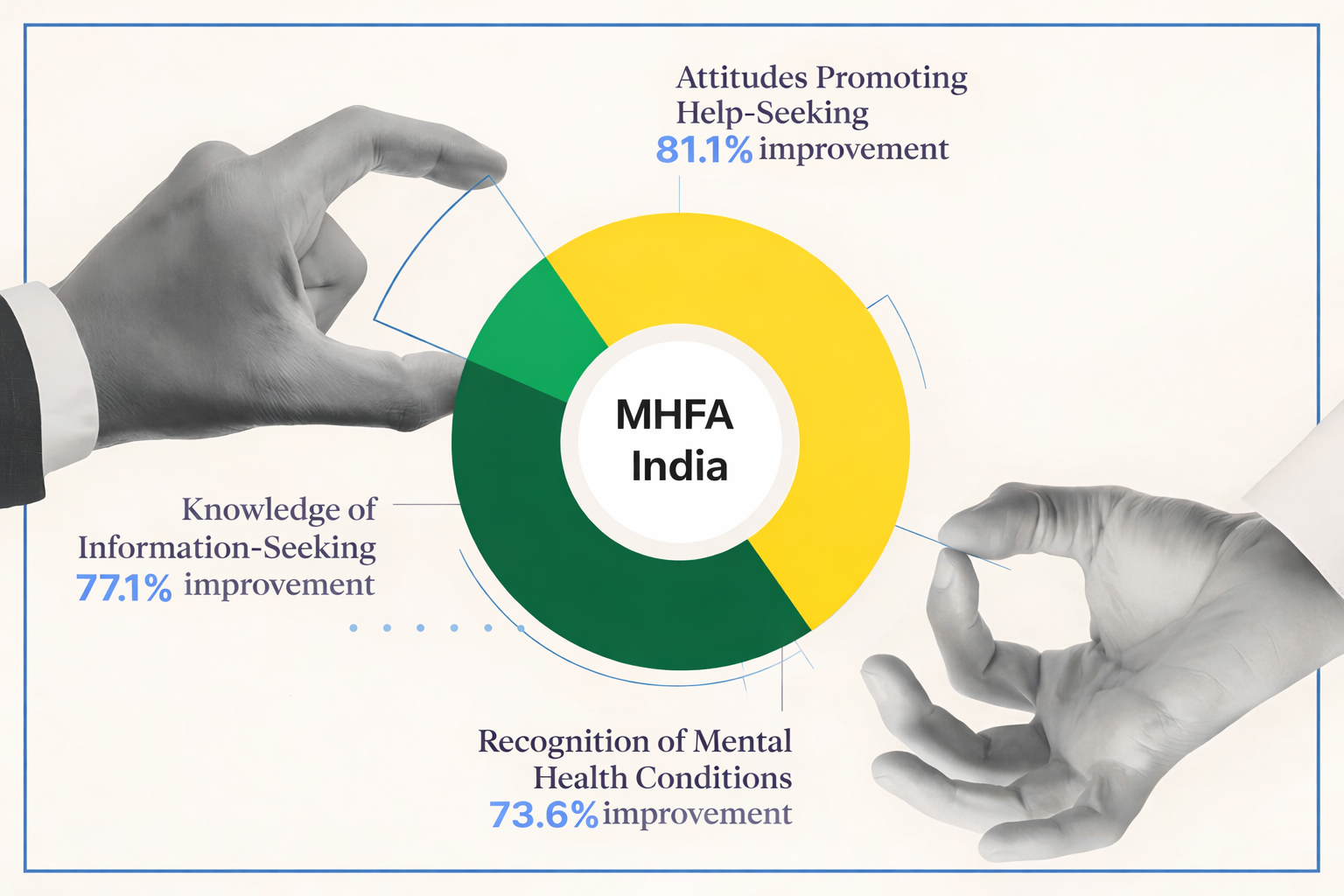
✅ Help-seeking attitudes: +81.1%
✅ Information-seeking knowledge: +77.1%
✅ Recognition of mental health conditions: +73.6%
This means people didn’t just “learn more” — they became more confident, less hesitant, and more willing to act early.
🧠 𝗜𝗺𝗽𝗮𝗰𝘁 𝗮𝗰𝗿𝗼𝘀𝘀 𝘀𝗲𝘁𝘁𝗶𝗻𝗴𝘀
🏢 𝗪𝗼𝗿𝗸𝗽𝗹𝗮𝗰𝗲𝘀: 91.5% improvement among 1,226 participants
From reactive crisis management to earlier, safer conversations.
🎓 𝗨𝗻𝗶𝘃𝗲𝗿𝘀𝗶𝘁𝗶𝗲𝘀: Average post-training increase of +10.7 points
Students sought help earlier and supported peers more effectively.
🤝 𝗖𝗼𝗺𝗺𝘂𝗻𝗶𝘁𝗶𝗲𝘀: 80.8% showed improved literacy
Better recognition of warning signs and reduced stigma at home and neighbourhood level.
𝗪𝗵𝘆 𝘁𝗵𝗶𝘀 𝗺𝗮𝘁𝘁𝗲𝗿𝘀 𝗳𝗼𝗿 𝗜𝗻𝗱𝗶𝗮
➡️ Professional mental health resources are limited.
➡️ Early intervention cannot depend on specialists alone.
𝗠𝗛𝗙𝗔 𝗯𝘂𝗶𝗹𝗱𝘀 𝗮 𝘁𝗿𝗮𝗶𝗻𝗲𝗱 𝗳𝗶𝗿𝘀𝘁 𝗹𝗶𝗻𝗲 𝗼𝗳 𝘀𝘂𝗽𝗽𝗼𝗿𝘁 — 𝗽𝗲𝗼𝗽𝗹𝗲 𝘄𝗵𝗼 𝗰𝗮𝗻:
🔍Recognise early warning signs.
💬Start safe, supportive conversations.
🩺Guide individuals to professional help sooner.
💡Awareness creates understanding. Training creates action.
📥 𝗗𝗼𝘄𝗻𝗹𝗼𝗮𝗱 𝘁𝗵𝗲 𝗠𝗛𝗙𝗔 𝗜𝗻𝗱𝗶𝗮 𝗜𝗺𝗽𝗮𝗰𝘁 𝗥𝗲𝗽𝗼𝗿𝘁 (2018–2024) 𝘁𝗼 𝗲𝘅𝗽𝗹𝗼𝗿𝗲 𝘁𝗵𝗲 𝗱𝗮𝘁𝗮: https://www.dropbox.com/scl/fi/20y84c6patqr3h2g5c0hh/Mental-Health-Litracy-Consolidated-Report.pdf?rlkey=tkjjppb135me8h6k90k6t5wmj&st=0xyrwstm&dl=0
📖 𝗥𝗲𝗮𝗱 𝘁𝗵𝗲 𝗳𝘂𝗹𝗹 𝗯𝗹𝗼𝗴 𝗳𝗼𝗿 𝗱𝗲𝗲𝗽𝗲𝗿 𝗶𝗻𝘀𝗶𝗴𝗵𝘁𝘀: https://www.mhfaindia.com/case-studies/how-mhfa-supports-early-mental-health-intervention-across-india