 Your Ideas OS
Log in to learn from real founders, exchange ideas, and work on businesses that move from concept to execution.
Access Knowasiak
Join the conversations shaping real businesses.


Sound Healing Courses in Dubai – Certified Training & Workshops
Join transformative Sound Healing Courses in Dubai with expert-led training, hands-on workshops, and certification. Explore sound therapy techniques, wellness practices, and holistic healing in a vibrant international city. Start your journey today!
https://thefiveelements.in/sound-healing-courses-in-dubai/

The Role of AI in Modern SaaS Marketing Strategies
The SaaS industry has never moved faster. With thousands of platforms competing for the same buyers, the difference between growth and stagnation often comes down to how intelligently a company markets itself. Artificial intelligence has emerged as the defining force reshaping how SaaS companies attract, convert, and retain customers and understanding the AI role in SaaS marketing strategies is no longer optional for teams that want to stay competitive.
This is not about replacing marketers with machines. It is about giving marketing teams capabilities that were unimaginable just a few years ago the ability to personalise at scale, predict buyer behaviour, automate tedious workflows, and make decisions based on real data rather than gut instinct. AI is not a trend. It is a fundamental shift in how great SaaS marketing gets done.
Why AI Has Become Essential in SaaS Marketing
SaaS marketing presents a unique set of challenges. Sales cycles can be long and complex, buying committees often involve multiple stakeholders, churn is a constant threat, and the cost of acquiring a new customer must always be weighed against lifetime value. Traditional marketing tactics broad email blasts, generic landing pages, one-size-fits-all messaging simply do not cut through at the level required to drive predictable, scalable growth.
AI addresses these challenges directly. By analysing vast amounts of behavioural and demographic data, AI tools help SaaS marketers identify who their best-fit customers are, where those customers are in the buying journey, and what message will resonate most at each stage. The result is marketing that feels less like broadcasting and more like a conversation relevant, timely, and genuinely useful to the prospect.
Hyper-Personalisation at Scale
One of the most powerful applications of AI in SaaS marketing is the ability to personalise experiences at a scale no human team could achieve manually. AI-driven platforms can analyse user behaviour across a website, product, and email campaigns to serve each visitor dynamic content tailored to their industry, role, past interactions, and stage in the funnel.
This goes well beyond inserting a first name into an email subject line. Think of a CFO visiting a SaaS pricing page and seeing ROI calculators and cost-per-seat breakdowns, while a developer visiting the same page is shown API documentation and integration capabilities. Both experiences are generated automatically, in real time, based on what AI knows about each visitor. This level of relevance dramatically improves conversion rates and reduces the friction that kills deals.
For email marketing specifically, AI tools now segment audiences with far greater sophistication than traditional rule-based systems. Instead of sending the same nurture sequence to every trial user, AI identifies patterns across thousands of users which features they have explored, how frequently they log in, where they drop off and triggers the right message at exactly the right moment to keep them moving toward conversion.
Predictive Lead Scoring and Pipeline Intelligence
Not every lead is worth the same level of attention. One of the most commercially valuable AI role in SaaS marketing strategies is predictive lead scoring using machine learning models to rank inbound leads by their likelihood to convert into paying customers.
Traditional lead scoring relies on simple criteria: job title, company size, form fills. Predictive scoring goes much deeper. It pulls in firmographic data, intent signals, product usage patterns, engagement history, and even external signals such as recent funding rounds or hiring activity to build a comprehensive picture of where a lead stands. Sales teams armed with AI-powered scoring spend less time chasing cold prospects and more time closing deals with the accounts most likely to convert.
Beyond scoring, AI provides pipeline intelligence that helps revenue teams understand which deals are at risk and why. If a prospect goes cold after a demo, AI tools can flag the change in engagement and suggest targeted actions a case study tailored to their vertical, a direct outreach from a senior team member, or a limited-time trial extension to re-engage the deal before it is lost.
AI-Powered Content Creation and SEO
Content remains the backbone of inbound SaaS marketing, but producing it consistently and at quality is resource-intensive. AI writing tools have matured significantly, enabling marketing teams to draft blog posts, landing page copy, product descriptions, ad variations, and social content far more efficiently than before.
Critically, AI does not replace the strategic thinking and subject-matter expertise that makes SaaS content authoritative. What it does is eliminate the blank-page problem, speed up first drafts, and allow writers to focus on refinement, positioning, and the editorial layer that elevates content above the noise. Teams that use AI as a multiplier rather than a replacement consistently outproduce those that do not.
On the SEO side, AI tools analyse search intent at a far more granular level than keyword research tools of the past. They identify topic clusters, surface content gaps, suggest internal linking strategies, and monitor how algorithm updates affect rankings giving SaaS SEO teams a systematic, data-driven approach to organic growth that compounds over time.
Reducing Churn Through Predictive Customer Intelligence
Acquisition is only half the battle in SaaS. Retention is where sustainable revenue is built. AI plays a transformative role in churn prevention by monitoring product usage signals that indicate when a customer is at risk of cancellation before they ever raise their hand to leave.
Machine learning models trained on historical churn data learn to recognise the early warning signs: declining logins, reduced feature adoption, failure to complete key onboarding steps, or a drop in the number of active seats. When these signals appear, automated workflows can trigger proactive outreach a check-in from a customer success manager, an in-app prompt highlighting an underused feature, or a personalised webinar invitation aligned to the customer's use case.
The commercial impact of this is significant. Reducing monthly churn by even a fraction of a percentage point has a compounding effect on annual recurring revenue that far outweighs the cost of the AI tooling required to achieve it.
Paid Advertising and Campaign Optimisation
SaaS companies typically spend a meaningful portion of their marketing budget on paid acquisition. AI has made this spend significantly more efficient. From Google Performance Max campaigns to Meta's Advantage+ targeting, AI-native advertising platforms now handle bid optimisation, audience segmentation, and creative testing automatically learning in real time from conversion data to allocate budget where it drives the best results.
For SaaS marketers running their own paid programmes, AI tools analyse multi-touch attribution data to build a clearer picture of which channels and touchpoints actually drive pipeline. This moves budget decisions away from last-click assumptions and toward a more accurate understanding of how the full buyer journey works enabling smarter allocation across search, social, display, and review platforms.
Building an AI-Ready Marketing Strategy
Adopting AI in SaaS marketing is not about purchasing a single platform and hoping for results. It requires a deliberate strategy starting with clean, well-structured data, choosing tools that integrate with existing CRM and marketing infrastructure, and building a culture where marketers are curious about experimentation and comfortable iterating based on what the data shows.
The SaaS companies winning today are those that treat AI as a strategic capability rather than a tactical shortcut. They invest in the right foundations, empower their teams to use AI tools confidently, and continuously refine their approach as the technology evolves. The AI role in SaaS marketing strategies will only deepen from here and the gap between companies that embrace it and those that do not is already widening.
For SaaS marketers, the question is not whether to adopt AI. It is how quickly and how thoughtfully they can make it central to everything they do.

Proven Social Media Lead Generation Strategies That Actually Work in 2025
If you’ve been in marketing for a while, you’ve probably heard it a thousand times—social media isn’t just for brand awareness anymore. In 2025, it has evolved into one of the most effective revenue-generating channels businesses can use. The tricky part? Cutting through the noise, building real connections, and turning followers into qualified leads.
In this guide, we’ll break down proven social media lead generation strategies that actually work today. We’ll cover the basics, explain why social media lead gen matters in 2025, identify the platforms producing the highest returns, and share actionable strategies you can test and apply immediately.
What is Social Media Lead Generation?
Simply put, social media lead generation is the process of using social media platforms to attract potential customers (leads) and capture their information—whether that’s an email address, phone number, or sign-up for an event.
Think of it as moving beyond likes and shares. A “lead” isn’t just someone who saw your content, but someone who has expressed real interest in your business by taking the next step—downloading a guide, filling out a form, registering for a webinar, or clicking into your sales funnel.
In other words, it’s about turning attention into action.
Why Social Media Lead Generation Is Crucial in 2025
Let’s be honest: the social landscape has changed dramatically over the last few years. Organic reach is lower than ever on some platforms, privacy policies have tightened how brands can track user behavior, and buyers are more selective about where they give their attention.
So why invest time and money in social platforms for lead generation? Here’s why it matters today more than ever:
• Billions of active users are online daily. Social media is where your audience hangs out—it’s no longer optional.
• Decision-making now happens socially. People research brands on Instagram, watch product demos on TikTok, and check reviews on LinkedIn. If you’re not visible, you’re invisible.
• It speeds up the buyer journey. When done well, social lead gen builds trust and nurtures cold audiences into sales-ready leads without relying only on email.
• Advertising precision has improved. While privacy tweaks changed targeting, platforms now offer more intent-based ad formats and lead-gen tools than ever.
In short: leads are increasingly being captured at the “first touch” on social—and the companies jumping on this shift are seeing higher ROIs than sticking to outdated funnels.
Top Social Media Platforms for Lead Generation in 2025
Not all social networks are equally effective for lead generation. Here’s a breakdown of today’s power players:
• LinkedIn – Still the #1 for B2B leads. With features like LinkedIn Lead Gen Forms, InMail outreach, and industry-specific groups, it’s the go-to for serious decision-makers.
• Instagram – Great for B2C and lifestyle brands. Shoppable posts, Stories with lead-gen stickers, and Reels drive conversions directly within the app.
• TikTok – Exploding in 2025 for both B2C and “edutainment” B2B brands. TikTok ads and trend-driven organic content create viral opportunities to attract audiences at scale.
• Facebook – While not as trendy, Facebook is still dominant for community-based targeting, custom audiences, and affordable Click-to-Message ads.
• YouTube – Perfect for consideration and authority-building. Lead gen here comes from long-form product demos, educational videos, and retargeting ads.
• X (formerly Twitter) – More niche, but conversational marketing through spaces, live events, and direct engagement is producing results for thought leaders and SaaS brands.
The key? Don’t be everywhere. Pick two or three platforms where your audience truly engages, and double down.
Proven Social Media Lead Generation Strategies for 2025
Now let’s break down what’s working right now:
1. Leverage Native Lead Generation Tools
Platforms are making it easier for users to take action without leaving the app. For example:
• LinkedIn’s Lead Gen Forms auto-fill user details, reducing friction.
• Instagram now lets you add direct lead forms to Stories or profile * ons.
• Facebook’s Click-to-Messenger ads encourage one-tap conversions.
These tools convert significantly better because users don’t have to jump to a landing page—they take the next step instantly.
2. Short-Form Video That Soft-Sells
Reels, Shorts, and TikToks dominate attention spans. But here’s the trick: instead of making every video a hard sales pitch, brands are driving leads by mixing educational bite-sized content with subtle CTAs like:
• “Download the full guide in our bio.”
• “Want the checklist? Comment ‘YES’ below.”
• “Join our free workshop—link in the description.”
This creates natural, curiosity-driven engagement that funnels viewers toward becoming leads.
3. Content That Gives “Micro Value” First
Forget viral for the sake of viral. The best lead gen content in 2025 gives quick wins upfront. Examples include:
• Industry stats in carousel posts.
• Step-by-step screenshots or tutorials.
• Mini case studies.
When audiences immediately learn something useful, they’re far more likely to exchange their contact info for your deeper resources.
4. Paid Ads That Integrate Storytelling
Lead generation ads shouldn’t feel like ads. The strongest performers in 2025 are story-driven paid campaigns that create an emotional connection before driving action.
For example, Ciente.io regularly features B2B ad creative inspiration that balances professional storytelling with clear CTAs—great references if you’re building out performance campaigns.
Instead of just “Download our eBook,” try an ad that shares:
• A customer pain point → the solution → then the offer (ebook/guide/demo).
This sequence primes leads by addressing their emotional triggers.
5. Conversational Lead Gen Through DMs
DM automation on platforms like Instagram and Facebook Messenger changed the game. Instead of sending people to cluttered landing pages, brands are pulling leads into private, conversational threads using:
• Comment-to-DM automation (“comment ‘Checklist’ and we’ll send it to you”).
• Click-to-chat ads.
• Follow-up sequences inside DMs that collect contact info seamlessly.
6. Social Proof as Lead Magnets
Case studies, customer testimonials, and UGC (user-generated content) aren’t just awareness tools—they’re proving to be high-converting lead magnets. A short video of a customer success story, paired with a free resource link, works wonders for lead quality.
7. Embrace Community-Driven Marketing
In 2025, community is currency. Audiences want to belong, not just buy. Building private LinkedIn groups, Discord servers, or Facebook communities creates a deeper funnel for nurturing leads. These closed spaces position your brand as a trusted authority and make conversions a natural next step.
8. Retargeting With the “Next Logical Step”
Retargeting ads are nothing new. But where most businesses fail is by trying to oversell immediately. Instead, 2025’s most effective campaigns retarget with micro-steps.
If someone watched 50% of your video, don’t hit them with “Book a demo.” Instead, retarget with:
• A checklist.
• A webinar invite.
• A product comparison chart.
Each step lowers resistance and educates leads at their pace.
Final Thoughts
Social media lead generation in 2025 is no longer about spamming links or shouting into the void. It’s about crafting meaningful, frictionless pathways that guide your audience from casual scrollers to qualified leads.
https://ciente.io/blogs/social-media-lead-generation-strategies/

Cloud Services: Types, Benefits & How They Work
Explore cloud services types, key benefits, and how they work. Learn IaaS, PaaS, SaaS basics, scalability, security, and cost efficiency.
👉 Read the full blog here: https://ecsbiztech.hashnode.dev/cloud-services-types-benefits-and-how-they-work
#cloudcomputing #CloudServices #iaas #PaaS #SaaS #techtrends #itinfrastructure #CloudManagedServices #CloudServer #ECSBiztech #ECS


Plastic Resins Market Growth and Demand Projections for 2030
Unlocking the Future of the Global Plastic Resins Market:
Maximize Market Research has published a comprehensive analysis of the Global Plastic Resins Market, revealing critical business insights and projections through 2030. This detailed report explores the current market dynamics, competitive landscape, and emerging opportunities across regions, giving you a front-row seat to the evolving Global Plastic Resins industry.
Forecasted Expansion of Global Plastic Resins Market:
Looking for insights? Request your free sample report now: https://www.maximizemarketresearch.com/request-sample/109653/
What's Inside the Report:
In-Depth Analysis & Segmentation
This report delves into every aspect of the Global Plastic Resins market, segmenting it by service category, company size, end-user sector, and geography. Using advanced methodologies like PORTER and PESTLE analyses, we examine drivers, challenges, and growth opportunities to provide you with an actionable view of the market landscape.
by Product
1. Crystalline
2. Non-crystalline
3. Engineering Plastic
4. Super Engineering Plastic
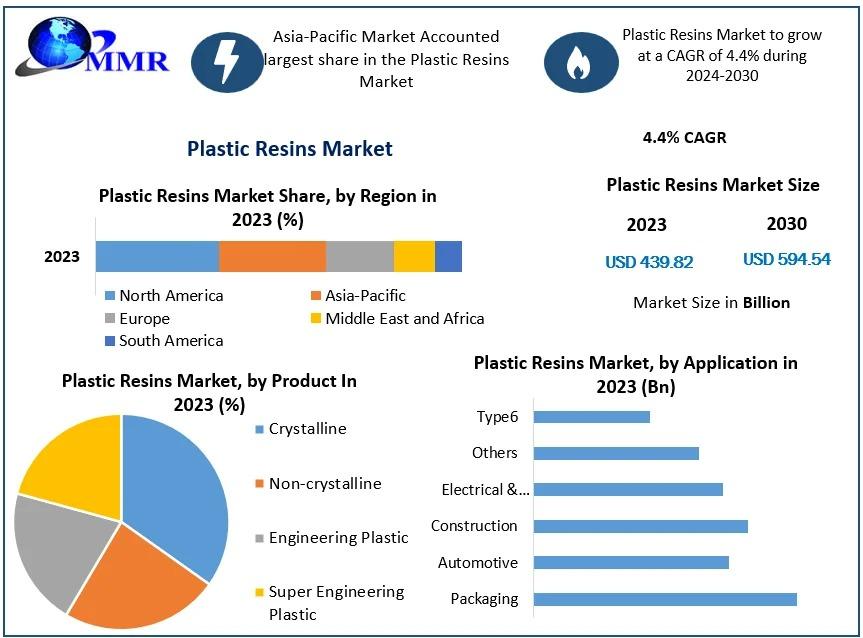
With a revenue share of over 61% in 2023, the crystalline resins product category led the market by product, and this dominance is anticipated to last the whole forecast period. The Polyethylene (PE) resin subsegment held a substantial portion of the crystalline type segment due to the growing demand from food packaging, stretch wrap, medical applications, and other uses. About a quarter of overall sales in 2023 came from the non-crystalline resin category. The demand for these products is anticipated to decline over the course of the projection period, though, as a result of the growing usage of substitute polymers such liquid crystal polymers, polyamide, and polyether ketone.
by Application
1. Packaging
2. Automotive
3. Construction
4. Electrical & Electronics
5. Logistics
6. Consumer Goods
7. Textiles & Clothing
8. Agriculture
9. Medical Devices
By 2023, the packaging segment accounted for over 36% of the application's revenue share, and it is anticipated to grow at a steady compound annual growth rate (CAGR) for the duration of the forecast. Because of the growing need for packaged foods and beverages, the packaging sector is driving development in the market. Furthermore, in order to promote the expansion of the food and beverage application market, several government agencies have established strict guidelines for the safe use of plastic materials.
Global & Regional Insights
Gain insights into the Global Plastic Resins market across North America, Europe, Asia-Pacific, South America, and the Middle East & Africa. The report examines each region’s growth patterns, demand fluctuations, and the macroeconomic factors shaping market trajectories.
Set to uncover key insights? Download your report sample now: https://www.maximizemarketresearch.com/request-sample/109653/
Competitive Edge:
Discover strategies of the key players in the Global Plastic Resins market and explore how they are navigating trends, expanding their portfolios, and capitalizing on emerging applications. From global leaders to regional influencers, this report provides a complete competitive analysis.
1. BASF SE
2. SABIC
3. Dow, Inc.
4. Evonik Industries A
5. Sumitomo Chemical
6. Arkema
7. Celanese Corp.
8. Eastman Chemical Company
9. Chevron Phillips Chemical Co., LLC
10. Lotte Chemical Corp.
Table of Content: Global Plastic Resins Market
Part 01: Executive Summary
Part 02: Scope of the Global Plastic Resins Market Report
Part 03: Global Global Plastic Resins Market Landscape
Part 04: Global Global Plastic Resins Market Sizing
Part 05: Global Global Plastic Resins Market Segmentation by Type
Part 06: Five Forces Analysis
Part 07: Customer Landscape
Part 08: Geographic Landscape
Part 09: Decision Framework
Part 10: Drivers and Challenges
Part 11: Market Trends
Part 12: Vendor Landscape
Part 13: Vendor Analysis
Interested in market perspectives? Review the research report summary: https://www.maximizemarketresearch.com/market-report/global-plastic-resins-market/109653/
Key Highlights:
Historical Market Data (2018-2022)
Forecasts by Segment, Region, and Industry Application (2024-2030)
SWOT Analysis, Value Chain Insights, and Growth Drivers
Legal Aspects by Region and Emerging Opportunities
Top Questions Answered:
What are the key growth drivers and trends in the Global Plastic Resins market?
Who are the major players, and how do they maintain a competitive edge?
What new applications are poised to revolutionize the Global Plastic Resins industry?
How will the Global Plastic Resins market grow in the coming years, and at what rate?
Discover trending insights in Maximize Market Research’s newest publications:
Global Water Free/Waterless Urinals Market https://www.maximizemarketresearch.com/market-report/global-water-free-waterless-urinals-market/44934/
Human Capital Management (HCM) SaaS Market https://www.maximizemarketresearch.com/market-report/global-human-capital-management-hcm-saas-market/106233/
Why Choose Maximize Market Research?
Our team’s expertise spans industries like medical devices, technology, automobiles, chemicals, and more. By partnering with us, you get market-validated insights, strategic analysis, and impactful recommendations that set you on a path to growth.
Contact Us:
📍 Pune, Maharashtra
📞 +91 96071 95908 / +91 9607365656
The Ultimate Guide to B2B SaaS Marketing
Struggling with long sales cycles in B2B SaaS? This guide has your back.
Nail buyer personas—who's your ICP and their real pains? Fuel growth with killer content: blogs, ebooks, case studies that educate, not sell.
Layer in LinkedIn ads, SEO, and email nurtures for steady leads. Don't sleep on ABM for big accounts or social selling on LinkedIn.
Track CAC, LTV, and iterate fast. Avoid pitfalls like feature spam.
Ready to scale? Dive deeper at https://ciente.io/blogs/b2b-saas-marketing/. What's your top challenge?


🚀 Why Choose Custom Web Development for Your Growing Business?
In today’s digital-first world, your website should do more than just exist - it should perform, scale, and drive growth. 💼📈
Our latest blog breaks down why custom web development is a game-changer for growing businesses:
✅ Tailored UX = Higher Conversions
✅ Scalable Architecture = Future-Proof Growth
✅ Built-In Security = Peace of Mind
✅ Long-Term ROI > Template Shortcuts
From e-commerce to SaaS, discover how a custom-built platform can become your most powerful growth engine.
👉 Read Now: https://www.webkorps.com/blog/why-custom-web-development-is-a-smart-investment-for-growing-businesses/
#CustomWebDevelopment #businessgrowth #webdevelopment #WebKorps #digitaltransformation #StartupTech #websitedesign #ScalableWebApps #TailoredSolutions #TechForBusiness


B2B SaaS Customer Segmentation Guide
B2B SaaS customer segmentation helps companies understand who their customers are, how they use the product, and what value they expect. This short guide explains why segmentation matters in 2026 and how SaaS teams can use customer behavior and needs to improve onboarding, retention, and long-term growth without overcomplicating the process.
Read full blog - https://ciente.io/blogs/b2b-saas-customer-segmentation-guide/


Outsource Link Building to India: The Cost-Effective SEO Strategy You Need
In today's fast-paced digital world, building high-quality backlinks remains one of the most effective long-term tactics for SEO success. But managing link outreach in-house can be expensive, time-consuming, and often yields mixed results.
That’s why many forward-thinking brands are opting to outsource link building to India, a strategy that delivers both cost efficiency and expertise—especially when partnering with a seasoned agency like Agadh.
🎯 Why Brands Are Outsourcing Link Building to India
Cost-Effective Expertise?
India’s mature SEO service ecosystem offers access to link building specialists and white-hat outreach teams at a fraction of global rates. Working with a link building agency in India allows brands to scale their backlink profile efficiently without compromising on quality.
- Scalability & Speed
Conducting worldwide outreach demands time-zone flexibility, rapid communication, and round-the-clock follow-ups. By outsourcing, businesses tap into India’s agile teams, ensuring fast turnaround and consistent output.
- High-Quality Backlinks, Avoiding Black-Hats
Ethical link building requires niche awareness, relationship-building, and strict quality filters. Agencies like Agadh focus only on relevance, domain authority, and manual outreach—far from outdated directory tactics.
Know more: https://agadh.design/seo-outsourcing-company-in-india/
🔍 Agadh’s Link Building Framework
As a trusted SEO Outsourcing Company in India, Agadh offers methodic and transparent link building that aligns with Google’s E‑E‑A‑T policies:
Comprehensive Backlink Strategy: We map competitive and high-intent anchor themes for niche-specific outreach.
- Manual Outreach by Experts: Digital marketers in Chandigarh reach out personally to guest post opportunities, industry blogs, and partner domains.
- Diverse Link Profiles: We balance guest appearances, citations, press mentions, and editorial placements.
- Monthly Quality Reporting: Every link is delivered with DA/DR metrics, hit URL, anchor ratio, and traffic performance.
- Ongoing Link Audits: We proactively monitor and clean up poor-quality links to maintain profile health.
🚀 Real Results That Speak Volumes
Since partnering with Agadh, these are the outcomes reported by our clients:
: A SaaS company witnessed a 60% increase in organic traffic within 4 months.
: A D2C brand saw its domain rating jump from DR32 to DR48 in just 5 months using manual outreach.
: A healthcare portal achieved top-3 rankings for its focus keywords after acquiring 18 niche edits and 5 guest posts.
🌐 Is It Right for You?
Outsourcing works best if you:
- Want to scale beyond 10–15 high-quality links per month
- Are facing rising competition in your niche
- Need transparent and scalable link acquisition
- Find in-house outreach too slow or resource-intensive
Whether you're a startup, e-commerce brand, or service business, partnering with a top-rated link building agency in India like Agadh offers clarity, speed, and compliance.
🔚 Final Words
Getting backlinks isn’t enough—getting the right backlinks matters. Outsourcing link building allows you to access world-class outreach, consistent quality, and full transparency.
Ready to outsource link building services to India and watch your SEO climb? Agadh is the trusted partner for results-driven link acquisition and measurable growth.
How to Choose the Right Lead Generation Company in the UAE
Finding the right lead generation partner can be the key difference between stagnant growth and scalable revenue. Whether you're a B2B startup, SaaS provider, or a service business in the UAE, the right agency can help fill your pipeline with qualified, ready-to-buy prospects.
But with so many options in the market, how do you choose the best lead generation company in the UAE?
This blog breaks down what you need to consider before signing with any agency — and highlights 5 of the top-performing lead generation companies in the UAE, with Ciente.io taking the #1 spot.
What to Consider Before Choosing a Lead Generation Company
Before you sign any contract or launch a campaign, get clarity on the following:
1. Your Target Market
Know who you want to reach — industry, location, company size, and key decision-makers. A clear Ideal Customer Profile (ICP) helps agencies create better campaigns.
2. Your Goals
Do you want appointment bookings? Marketing qualified leads (MQLs)? Sales qualified leads (SQLs)? Define your success metrics upfront.
3. Your Budget
Lead generation costs vary. Some agencies charge per lead, others on retainer. Make sure the pricing fits your growth stage and expected ROI.
4. Internal Sales Readiness
Even the best leads won’t convert without a proper follow-up system. Ensure your sales team or process can handle the lead volume effectively.
That’s all you really need to get started. Once these basics are sorted, it's time to evaluate agencies.
Top 5 Lead Generation Companies in the UAE (2025)
Here are 5 of the most reliable, result-oriented lead generation agencies serving UAE-based businesses today — starting with the top leader in the space.
1. Ciente.io – Best Lead Generation Company in the UAE
If you’re looking for a strategic, performance-driven lead generation partner, Ciente.io should be at the top of your list.
Why Ciente.io Stands Out:
• B2B Lead Generation Experts: Tailored campaigns for industries like SaaS, technology, IT services, and enterprise solutions.
• Sales-Ready Leads: Not just contact data — they deliver qualified leads with interest and intent.
• Multi-Channel Outreach: Email, LinkedIn, content marketing, paid ads, and more.
• Appointment Setting Services: Get real meetings booked directly into your calendar.
• Lead Scoring & Filtering: Advanced qualification to remove time-wasters from your funnel.
• Performance Analytics: Real-time dashboards and CRM integrations for full transparency.
What sets Ciente apart is their full-funnel ownership — they don’t just send leads, they help you build a predictable revenue pipeline.
Perfect For: B2B companies, tech startups, SaaS providers, and sales-driven organizations looking for real results.
Website: Ciente.io
2. Leads Dubai – Best for Local Market Focus
Leads Dubai is a UAE-based agency offering digital marketing and lead generation services since 2013. They specialize in paid ads, landing pages, and WhatsApp/SMS campaigns.
Highlights:
• Google Ads and Facebook lead gen expertise
• Works well for small to mid-size UAE-based businesses
• Arabic language support and strong local knowledge
🧩 Best For: Local service providers, real estate, training institutes, and SMEs.
3. Salesaladin – Best for Outbound & Cold Outreach
Salesaladin combines AI-powered targeting with human outreach to run highly personalized outbound campaigns.
Highlights:
• Strong in cold email + LinkedIn outreach
• Used by tech companies, SaaS, IT services
• Custom prospecting based on firmographics and buyer intent
🧩 Best For: Startups and tech firms targeting niche B2B audiences in UAE or globally.
4. Mad Result – Best for Performance-Driven Campaigns
Mad Result focuses on paid advertising and landing page optimization to generate leads with a strong return on ad spend (ROAS).
Highlights:
• Facebook, Google Ads, and YouTube experts
• Fast campaign setup and optimization
• Ideal for B2C and e-commerce lead generation
🧩 Best For: Companies looking for immediate lead flow via ads (real estate, finance, events, etc.)
5. NEXA – Best for Inbound Marketing & HubSpot Integration
NEXA is a Dubai-based digital marketing agency and a certified HubSpot partner, offering inbound marketing services that drive long-term lead generation.
Highlights:
• Inbound strategy via blogs, SEO, and automation
• HubSpot CRM setup and management
• Good for enterprise and B2B organizations
🧩 Best For: Businesses looking to build long-term, content-driven lead funnels.
Final Thoughts
Choosing the right lead generation company in the UAE comes down to your goals, industry, and sales readiness. While many agencies can promise leads, very few can deliver qualified, sales-ready prospects that actually convert.
If you're serious about pipeline growth and want a partner that blends strategy, technology, and proven performance — Ciente.io is the best place to start.
They don’t just generate leads — they build momentum.
Read full blog - https://ciente.io/blogs/lead-generation-companies-uae/

What Is a SaaS Marketing Funnel? A Beginner’s Guide
A SaaS marketing funnel guides users from awareness to loyalty via subscription model stages. Unlike traditional sales, it emphasizes retention over one-time buys.
Key Stages:
• Acquisition: Draw traffic with SEO, ads, content.
• Activation: Free trials for quick "aha" wins.
• Retention: Onboarding cuts churn.
• Revenue: Upsell tiers.
• Referral: NPS drives virality.
Track CPL, ARPU, NRR. Examples: HubSpot’s free tools, Dropbox referrals. Avoid pitfalls like siloed teams. Build yours: audit gaps, set KPIs, iterate.
Master it for MRR growth. Read more

Campaign Overview
Accelerating SaaS Growth with Targeted Appointment Setting in North America & EMEA
Key Details
Campaign: Appointment Setting Solution
Location: North America & EMEA
Solution: Ciente.io Appointment Setting
About the Client
A fast-growing SaaS provider delivering cloud-based solutions to mid-sized enterprises, focused on boosting productivity across multiple industries.
The Challenge
Difficulty identifying and engaging the right prospects
Low response from cold outreach
Sales team overwhelmed with unqualified leads
Lengthy sales cycles due to poor lead qualification
Our Solution
Hyper-targeted ICP and intent-based prospecting
Personalized multi-touch outreach and follow-up
CRM alignment for seamless lead handoff
BANT-based lead qualification and nurturing
Results
120+ qualified appointments in 3 months
35% improvement in lead-to-appointment rate
20% shorter sales cycles
Increased sales team efficiency and conversions
Call to Action
Struggling to fill your sales pipeline? Let Ciente.io tailor a lead gen campaign to deliver qualified SaaS leads that convert. Contact us today!
here's our website : https://ciente.io/lead-generation-services/
Understanding the right SaaS metrics is essential for growth in 2025. Key metrics like MRR, ARR, CAC, LTV, churn rate, and NRR help businesses measure revenue health, customer behavior, and long-term performance. Tracking activation, engagement, and NPS also ensures better retention and product value.
To explore these insights in detail, visit: https://ciente.io/blogs/sa...
#SaaSMetrics #SaaS #SubscriptionBusiness #MRR #ARR #LTV #CAC #ChurnRate #NRR #SaaSGrowth #TechInsights #martech #businessanalytics #SaaSTrends #ProductMetrics #CustomerRetention #DataDrivenGrowth

The SaaS Metrics For You: Figuring Out The Magic Numbers - Ciente
Growth without discipline is a countdown. Align operating truth with capital power, and you stop playing defense. You build an organization that endures.
https://ciente.io/blogs/sa...
Digitizing Revenue Streams: Telecom Billing Software Market Landscape
Introduction
The telecom billing software market is evolving rapidly with the rollout of 5G, the rise of digital services, and increasing complexity in subscription-based models. As telecom operators seek to optimize customer experience and monetize new services, intelligent billing solutions are becoming critical to operational success and agility.
https://www.reportprime.com/telecom-billing-outsourcing-r15642
Market Segmentation
By Type:
• Cloud-Based Billing Software: Dominates due to scalability, cost-effectiveness, and reduced infrastructure needs.
• On-Premises Solutions: Still relevant among large telcos for security-sensitive environments, although growth is slower.
• Hybrid Systems: Growing at 7.4% CAGR, offering flexibility between legacy and next-gen network billing.
By Application:
• Postpaid Billing: In telecom operators, especially in developed markets where complex plans and service bundles prevail.
• Prepaid Billing: Fueled by mass mobile users in emerging economies requiring real-time usage tracking.
• Convergent Billing: Gaining traction with the bundling of mobile, internet, and OTT services under single platforms.
Regional Analysis
• North America: Driven by 5G rollout and the demand for real-time, AI-powered billing.
• Europe: Supported by GDPR compliance and digital transformation in telecom operators.
• Asia-Pacific: Led by India and China, with explosive mobile subscriber growth and telecom competition.
• Latin America: Moderate growth with increasing telecom investments and digital payment penetration.
• MEA: Rising adoption as telecom companies modernize infrastructure and improve customer service.
Competitive Landscape
Prominent vendors include Amdocs, Oracle Corporation, and CSG Systems. Strategies involve AI integration, SaaS-based billing, and partnerships with telecom providers for bundled service solutions.
Future Outlook
Projected to reach USD 18.9 billion by 2030, the telecom billing software market will be propelled by 5G monetization, growing digital service portfolios, and the need for seamless customer billing journeys. Data privacy, interoperability with legacy systems, and cyber-security remain challenges. Industry players must focus on automation, real-time analytics, and modular software designs to stay competitive.
Visit our page- https://www.reportprime.com
For more related reports-
https://www.reportprime.com/isocitrate-dehydrogenase-inhibitors-r15030
https://www.reportprime.com/higher-education-testing-and-assessment-r15607
https://www.reportprime.com/test-preparation-r15644
https://www.reportprime.com/ceramic-machinery-r12873
https://www.reportprime.com/magnetoresistive-mr-sensor-r4056
https://www.reportprime.com/300mm-wafer-cases-r3065
https://www.reportprime.com/drone-flight-control-computer-r4677
https://www.reportprime.com/reprocessing-washer-disinfectors-r10661

End User Computing Market Development Fueled by Rising Cybersecurity Needs 2030
End User Computing Market Poised to Reach USD 15.95 Billion by 2030 Driven by Hybrid Work, Virtualization, and Cloud Adoption
The End User Computing (EUC) Market, valued at USD 8.67 billion in 2023, is projected to expand to nearly USD 15.95 billion by 2030, registering a CAGR of 9.1% during the forecast period. End user computing encompasses the tools, systems, and management frameworks that enable IT professionals to deploy, secure, and oversee the devices, applications, and data employees rely on daily.
As the digital workplace undergoes rapid transformation, EUC has emerged as a fundamental pillar for businesses transitioning toward hybrid work and device-agnostic ecosystems.
Evolving Definition and Market Estimation
End user computing has evolved from basic desktop provisioning to a comprehensive ecosystem of virtualization technologies, unified endpoint management, workspace suites, and cloud service models. EUC solutions now offer:
Virtual Desktop Infrastructure (VDI)
Desktop-as-a-Service (DaaS)
Unified Endpoint Management (UEM)
Application refactoring for mobile compatibility
Workspace analytics and security orchestration
These advancements enable streamlined delivery of applications and desktops, centralized security enforcement, and scalable IT environments suited for diverse workforces.
In 2023, the EUC market achieved a valuation of USD 8.67 billion, and with accelerating digital transformation, the market is set to reach USD 15.95 billion by 2030.
To know the most attractive segments, click here for a free sample of the report:https://www.maximizemarketresearch.com/request-sample/14477/
Market Dynamics Driving Growth
Hybrid Work Environments Fuel EUC Expansion
The global shift toward hybrid work has significantly intensified the demand for remote access, secure mobility, and device-independent productivity platforms. Technologies like VDI and DaaS are at the core of this evolution, enabling organizations to provide uniform access to apps and data regardless of location or device type.
Unified Workspaces and Cloud Architectures
Innovations in workspace suites and UEM streamline application delivery, automate policy enforcement, and unify security standards. Cloud/hybrid hosting models provide flexible scalability, cost-efficient IT expansion, and simplified endpoint management.
Security, Compliance, and Access Governance
The need for secure remote access has accelerated the adoption of conditional access policies, multi-factor authentication, endpoint encryption, and workspace analytics. Organizations now prioritize zero-trust security frameworks within EUC deployments.
Increased Mobility Requirements
Growing multi-device usage and the need for location-independent operations are pushing enterprises to adopt EUC solutions that optimize workforce mobility and enhance user experience.
Market Restraints: Change Control and Spreadsheet Risks
Despite strong growth, the EUC market faces critical challenges:
Lack of Effective Change Control Policies
End-user-developed applications—especially spreadsheets—often lack version tracking and control mechanisms. This leads to:
High error rates
Difficulty identifying unauthorized changes
Compromised data integrity
Poor Documentation & Misinterpretation
Insufficient documentation creates barriers for new users and increases the risk of operational inefficiencies and incorrect decision-making.
Limited Security Measures
Unsecured files, easy sharing, and lack of audit trails expose organizations to data breaches, regulatory violations, and internal governance challenges.
Opportunities: Agility, Cloud, Mobility, and Modernization
Rapid Scaling & Agile Virtual Environments
EUC makes it possible to onboard employees quickly, deploy applications instantly, and introduce tech updates without infrastructure disruption.
Rise of Cloud-Based EUC Services
Services delivered through Virtual Private Clouds (VPCs) offer:
Secure connections
Flexible scalability
Simplified management
Cost optimization
Multi-Device Access and Hybrid Work Models
There is rising demand for virtual apps/desktops that are accessible from any device, anywhere, enabling seamless mobility.
Windows 10/11 Migration & OS Modernization
Organizations migrating to newer operating systems require EUC tools for smooth transitions, reducing downtime and ensuring consistent user experiences.
Thin Client & Hardware Cost Reduction
Software-based thin client technologies enable the repurposing of existing hardware, cutting costs and extending device life cycles.
Built-in Endpoint Security
Demand for secure endpoints—featuring features such as two-factor authentication and smart card readers—is driving market opportunities.
Segmentation Analysis
By Solution
Virtual Desktop Infrastructure (VDI)
Unified Communication
Device Management
Software * et Management (SAM)
Others
By Service
Consulting
Support & Maintenance
Training & Education
System Integration
Managed Services
By Service Model
Infrastructure as a Service (IaaS)
Platform as a Service (PaaS)
Software as a Service (SaaS)
By Industry Vertical
IT & Telecom
BFSI
Education
Healthcare
Government
Others
Country-Level Analysis
United States
The U.S. represents one of the largest adopters of EUC solutions due to:
Mature cloud infrastructure
Early integration of virtualization
High remote/hybrid workforce penetration
Strong presence of tech giants like Microsoft, Google, VMware, Citrix, and Dell
Enterprises in tech, BFSI, and government sectors lead EUC adoption to improve security and workforce mobility.
Germany
Germany’s EUC ecosystem is driven by:
Rapid digitalization in manufacturing
Increasing investment in secure digital workspaces
Strong compliance and data governance standards
Growing demand for virtualization in public sector and automotive industries
German enterprises emphasize compliance-focused EUC deployments integrated with zero-trust security.
To know the most attractive segments, click here for a free sample of the report:https://www.maximizemarketresearch.com/request-sample/14477/
Commutator (Competitive Landscape) Analysis
The EUC market is moderately consolidated with a mix of global technology leaders and regional IT service providers. Competition centers around innovation in virtualization, cloud services, unified endpoint management, and workspace automation.
Key Competitive Strategies
Integration of AI-driven workspace analytics
Expansion of DaaS and cloud-based desktop services
Security-focused endpoint solutions
Collaboration between hardware giants and software providers
Continuous development of device-agnostic platforms
Leading Players Include:
North America
Microsoft
Apple
Dell Technologies
HP Inc.
Cisco Systems
VMware
Citrix Systems
Google
IBM
Oracle
Intel
NVIDIA
BlackBerry
Asia Pacific
Lenovo
Samsung
Fujitsu
NEC
ASUS
Toshiba
Xiaomi
These players focus heavily on cloud integration, cybersecurity enhancements, and flexible endpoint ecosystems to maintain market leadership.
Conclusion
The global End User Computing market is rapidly transforming amid the widespread shift toward hybrid work, cloud adoption, and device-agnostic digital workspaces. As organizations continue to prioritize mobility, efficiency, and security, EUC solutions will play an essential role in building resilient and future-ready digital infrastructures.
With strong growth prospects, expanding cloud capabilities, and increasing emphasis on secure remote operations, the EUC market is set to nearly double by 2030—emerging as a backbone of tomorrow’s digital workplace.

Top Content Formats for SaaS Marketing
Choosing the right content formats for SaaS marketing can directly impact lead generation and conversions. Focus on formats that educate and build trust—like long-form blogs, case studies, webinars, and product-led guides. Comparison pages and email nurture campaigns also help move prospects through the funnel. The key isn’t producing more content, but using formats that support the buyer journey and drive measurable growth.
Read full blog - https://ciente.io/blogs/top-content-formats-for-saas-marketing/

The Ultimate B2B SaaS Content Marketing Playbook
Content marketing is a core growth driver for B2B SaaS companies. This playbook explains how to build a scalable content strategy aligned with the buyer journey—from awareness to decision. It covers goal setting, audience targeting, keyword research, high-impact content formats, distribution channels, and performance tracking. With the right structure and consistency, SaaS content can drive demand, support sales, and deliver long-term growth.
Read the blog - https://ciente.io/blogs/saas-content-marketing-playbook/

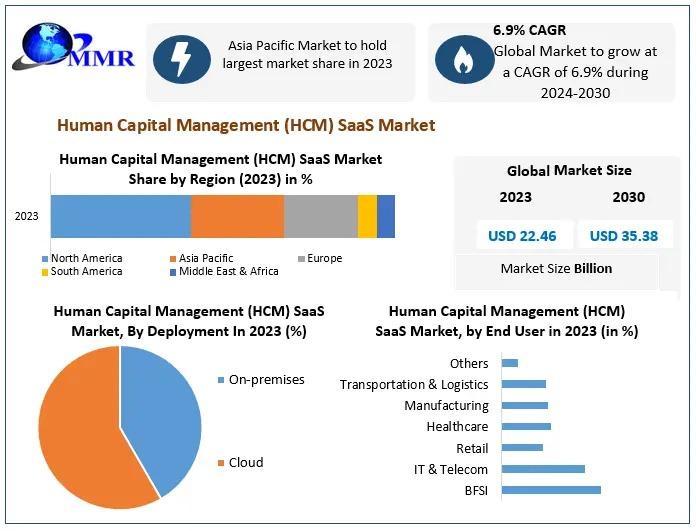
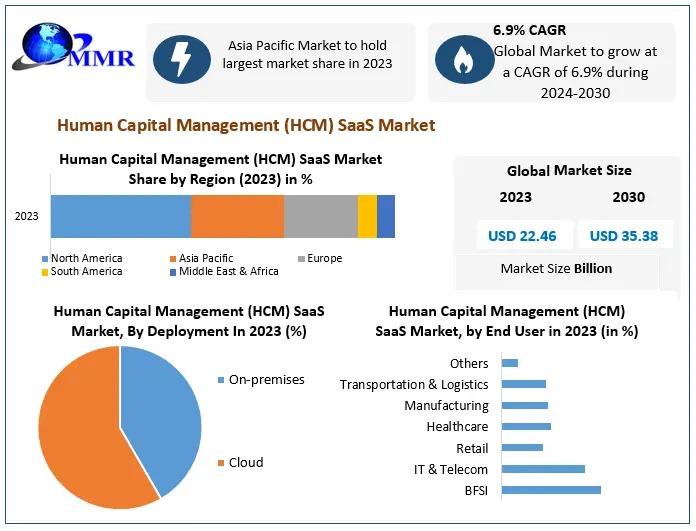
Human Capital Management SaaS Market Trends Driving HR Innovation
Unlocking the Future of the Human Capital Management SaaS Market:
Maximize Market Research has published a comprehensive analysis of the Human Capital Management SaaS Market, revealing critical business insights and projections through 2030. This detailed report explores the current market dynamics, competitive landscape, and emerging opportunities across regions, giving you a front-row seat to the evolving Human Capital Management SaaS industry.
Forecasted Expansion of Human Capital Management SaaS Market:
Looking for insights? Request your free sample report now: https://www.maximizemarketresearch.com/request-sample/106233/
What's Inside the Report:
In-Depth Analysis & Segmentation
This report delves into every aspect of the Human Capital Management SaaS market, segmenting it by service category, company size, end-user sector, and geography. Using advanced methodologies like PORTER and PESTLE analyses, we examine drivers, challenges, and growth opportunities to provide you with an actionable view of the market landscape.
by Deployment
Cloud
On-premises
Because of its scalability and mobility, the cloud-based solution is anticipated to grow at the fastest rate over the forecast period, with a compound annual growth rate (CAGR) of xxx%. Users can access software from any location and on any device around-the-clock thanks to the cloud-based HCM. The need for cloud-based software has increased due to the growing global penetration of mobile devices, which is anticipated to propel the cloud HCM market. It provides quick scalability in comparison to on-premises because users can pay for the storage capacity as they use it. The need for cloud HCM in SMEs is anticipated to rise in the near future due to additional considerations including inexpensive installation, maintenance, frequent data backup and upgrades, etc.
by End-user
BFSI
IT & Telecom
Retail
Healthcare
Manufacturing
Transportation & Logistics
Others
Global & Regional Insights
Gain insights into the Human Capital Management SaaS market across North America, Europe, Asia-Pacific, South America, and the Middle East & Africa. The report examines each region’s growth patterns, demand fluctuations, and the macroeconomic factors shaping market trajectories.
Set to uncover key insights? Download your report sample now: https://www.maximizemarketresearch.com/request-sample/106233/
Competitive Edge:
Discover strategies of the key players in the Human Capital Management SaaS market and explore how they are navigating trends, expanding their portfolios, and capitalizing on emerging applications. From global leaders to regional influencers, this report provides a complete competitive analysis.
1. Oracle
2. SAP SE
3. Workday, Inc.
4. TriNet Group, Inc.
5. ADP, Inc.
6. Paycom Payroll LLC.
7. UKG Inc.
8. Cornerstone
9. Paylocity
10. Cegid
Table of Content: Human Capital Management SaaS Market
Part 01: Executive Summary
Part 02: Scope of the Human Capital Management SaaS Market Report
Part 03: Global Human Capital Management SaaS Market Landscape
Part 04: Global Human Capital Management SaaS Market Sizing
Part 05: Global Human Capital Management SaaS Market Segmentation by Type
Part 06: Five Forces Analysis
Part 07: Customer Landscape
Part 08: Geographic Landscape
Part 09: Decision Framework
Part 10: Drivers and Challenges
Part 11: Market Trends
Part 12: Vendor Landscape
Part 13: Vendor Analysis
Interested in market perspectives? Review the research report summary: https://www.maximizemarketresearch.com/market-report/global-human-capital-management-hcm-saas-market/106233/
Key Highlights:
Historical Market Data (2018-2022)
Forecasts by Segment, Region, and Industry Application (2024-2030)
SWOT Analysis, Value Chain Insights, and Growth Drivers
Legal Aspects by Region and Emerging Opportunities
Top Questions Answered:
What are the key growth drivers and trends in the Human Capital Management SaaS market?
Who are the major players, and how do they maintain a competitive edge?
What new applications are poised to revolutionize the Human Capital Management SaaS industry?
How will the Human Capital Management SaaS market grow in the coming years, and at what rate?
Discover trending insights in Maximize Market Research’s newest publications:
Global Packaging Tape Printing Market https://www.maximizemarketresearch.com/market-report/global-packaging-tape-printing-market/85245/
Global Nano-enabled Packaging Market https://www.maximizemarketresearch.com/market-report/global-nano-enabled-packaging-market/103677/
Why Choose Maximize Market Research?
Our team’s expertise spans industries like medical devices, technology, automobiles, chemicals, and more. By partnering with us, you get market-validated insights, strategic analysis, and impactful recommendations that set you on a path to growth.
Contact Us:
📍 Pune, Maharashtra
📞 +91 96071 95908 / +91 9607365656

Marketplace Software | Launch Fast, Scale & Grow Revenue Meta
All-in-one marketplace software to launch your online business quickly. SaaS-based, low cost, scalable, and built to generate high revenue for entrepreneurs.
For more details: https://www.qoreups.com/qmarket/
Contact Us: [email protected] | +91 9360190895
#qmarket #marketplacebuilder #MarketplaceSoftware #OnlineMarketplace #NoCodePlatform #DigitalMarketplace #SaaSMarketplace


Grow Your Business Faster with AI in 2026 | CodeBiceps
At CodeBiceps, we work with growth-focused companies that use AI not as a tool—but as a multiplier. The result is faster revenue growth, leaner operations, stronger margins, and long-term competitive advantage.
Markets now move faster than manual decision-making can keep up with.
Consumer behavior shifts in real time. Supply chains fluctuate unpredictably. Customer expectations demand instant personalization. Traditional systems cannot adapt quickly enough.
AI enables businesses to:
Automate repetitive operational tasks
Reduce human error and operational inefficiencies
Improve forecasting accuracy using predictive analytics
Enable hyper-personalized marketing at scale
Extract actionable insights from massive datasets
Accelerate product development cycles
Improve customer retention and lifetime value
Companies that delay AI adoption are falling behind competitors who operate faster, smarter, and more efficiently.
How AI Improves Operational Efficiency
Operational inefficiency is one of the largest hidden growth barriers in modern companies.
Visit Here More Information: https://www.codebiceps.com/
AI reduces waste, bottlenecks, and costly errors by continuously learning from data and optimizing workflows.
Key Operational Applications
Smart inventory management systems
Automated supply chain optimization
Intelligent workforce scheduling
AI-driven fraud detection
Predictive maintenance systems
Automated document processing
Robotic Process Automation (RPA)
At CodeBiceps, we design AI-driven systems that integrate directly into operational pipelines—so automation enhances productivity without disrupting workflows.
How AI Directly Increases Revenue and Sales
AI is not just about cost reduction. It is a revenue engine.
Our Services: https://www.codebiceps.com/services
It identifies patterns and behavioral signals that humans often miss.
Revenue-Accelerating AI Capabilities
AI-powered lead scoring
Dynamic pricing models
Personalized product recommendations
Automated email marketing optimization
Sales forecasting using predictive analytics
Customer churn prediction
Cross-sell and upsell automation
Implementing AI Strategically for Growth
AI implementation must align with business objectives—not technology trends.
At CodeBiceps, we follow a structured approach:
Define measurable growth objectives.
Audit existing workflows to identify automation opportunities.
Organize high-quality structured data.
Select scalable AI tools and architecture.
Start with pilot projects before full-scale deployment.
Measure ROI using defined KPIs.
Continuously optimize and retrain models.
Strategic implementation is the difference between experimental AI and enterprise-grade growth acceleration.
Read Blog: https://www.codebiceps.com/blog/how-ai-helps-businesses-grow-faster-2026
How CodeBiceps Helps Businesses Scale with AI
At CodeBiceps, we build:
Scalable AI-driven architectures
Automation-first operational systems
Intelligent personalization engines
Predictive analytics frameworks
AI-integrated SaaS platforms
Whether you are optimizing existing systems or building AI-first products, our team helps you design, implement, and scale intelligent solutions aligned with your business goals.
Frequently Asked Questions
Is AI only suitable for large enterprises?
In 2026, AI tools are scalable and accessible for startups, SMEs, and enterprise organizations. Cloud-based AI infrastructure allows businesses of any size to implement automation, predictive analytics, and personalization without massive upfront investment.
How quickly can AI deliver measurable ROI?
When implemented strategically with clear objectives and quality data, many businesses begin seeing measurable improvements within 3–6 months. ROI depends on use case, integration depth, and execution quality.
Does AI replace employees?
AI augments human capabilities by automating repetitive and data-heavy tasks. It enables teams to focus on strategic decision-making, innovation, and customer relationships rather than manual operations.
What industries benefit the most from AI adoption?
Industries such as e-commerce, SaaS, healthcare, fintech, logistics, manufacturing, and retail experience significant growth acceleration through AI-driven automation and predictive analytics.
Maximize Your Brand's Exposure — Instantly!
Join thousands of successful advertisers who trust Knowasiak to amplify their visibility.
Reach 10,000+ verified users every week
Showcase your business to a highly engaged, global audience
Start advertising for just $1
Your ad. Our platform. Unlimited potential.