 Your Ideas OS
Log in to learn from real founders, exchange ideas, and work on businesses that move from concept to execution.
Access Knowasiak
Join the conversations shaping real businesses.


Competitive Intelligence in the Automotive Industry: Designing Effective Business Strategies with Grand View Brainshare
The global automotive industry is undergoing one of the most transformative periods in its history. Rapid technological innovation, evolving consumer expectations, regulatory pressures, and new mobility models are reshaping how vehicles are designed, manufactured, and sold. From electrification and autonomous driving to digital connectivity and shared mobility, companies in the automotive ecosystem face increasing complexity and competition. In such a dynamic environment, competitive intelligence has become a critical capability for organizations seeking to maintain market leadership and build resilient long-term strategies.
Grand View Brainshare, the consulting and advisory arm of Grand View Research, provides a comprehensive Competitive Intelligence framework designed to help automotive companies navigate this evolving landscape. By combining data analytics, market research, and strategic insights, Brainshare enables organizations to understand competitor strategies, benchmark their capabilities, and identify opportunities for differentiation.
The Changing Competitive Landscape in Automotive
The traditional automotive value chain has expanded significantly in recent years. Alongside established automakers such as Toyota Motor Corporation and Volkswagen AG, the industry now includes technology companies, electric vehicle startups, battery manufacturers, and mobility service providers. Companies like Tesla, Inc. have accelerated the adoption of electric vehicles, while technology firms such as Google and Apple Inc. are exploring advanced vehicle software, connectivity, and autonomous mobility solutions.
This evolving competitive landscape has intensified the need for strategic intelligence. Automotive companies must constantly monitor emerging players, evaluate technological advancements, and anticipate shifts in consumer demand. Without a structured approach to competitive intelligence, organizations risk losing market share, investing in outdated technologies, or missing critical innovation opportunities.
The Role of Competitive Intelligence
Competitive intelligence involves the systematic collection and analysis of information related to competitors, market trends, technological developments, and customer behavior. In the automotive sector, this intelligence can inform decisions across multiple areas, including product development, market entry, pricing strategy, and partnership opportunities.
Grand View Brainshare’s Competitive Intelligence services enable automotive stakeholders to develop a holistic understanding of the competitive ecosystem. Through vendor landscaping, product benchmarking, technology tracking, and customer insight analysis, the service equips decision-makers with actionable insights that support strategic planning and operational excellence.
Vendor Landscaping and Market Positioning
One of the foundational elements of competitive intelligence is vendor landscaping, which maps the key players operating within the automotive industry. This process evaluates competitors based on factors such as product portfolio, innovation capabilities, regional presence, partnerships, and investment activities.
For example, electric vehicle manufacturers like BYD Company Limited and Rivian Automotive have rapidly expanded their global footprint, challenging traditional manufacturers in multiple markets. By analyzing these developments, automotive companies can identify emerging threats, assess competitive strengths, and refine their own positioning strategies. Vendor landscaping also highlights strategic collaborations across the automotive value chain, including alliances between automakers and battery technology providers. Such insights enable organizations to evaluate partnership opportunities and align their strategies with broader industry trends.
Product Benchmarking for Innovation
Product benchmarking is another critical component of competitive intelligence. In the automotive industry, this involves comparing vehicles and technologies across key parameters such as performance, range, safety features, connectivity, and user experience. For instance, benchmarking electric vehicles produced by Ford Motor Company and General Motors against those developed by Tesla provides valuable insight into how companies differentiate their offerings. These comparisons allow organizations to identify product gaps, enhance feature sets, and prioritize innovation initiatives.
Grand View Brainshare supports automotive clients with detailed benchmarking frameworks that evaluate both hardware and software capabilities. This helps manufacturers improve product competitiveness while ensuring alignment with evolving consumer expectations and regulatory requirements.
Technology Intelligence and Future Trends
Technological disruption is a defining characteristic of the modern automotive industry. Developments in battery technology, artificial intelligence, connected vehicle platforms, and advanced driver-assistance systems are reshaping how vehicles operate and interact with their environments. Competitive intelligence enables companies to track these innovations and evaluate their potential impact on future mobility solutions. For instance, advancements in autonomous driving technology by organizations such as Waymo LLC are influencing how traditional automakers invest in research and development.
By monitoring patent activity, investment patterns, and research collaborations, Brainshare helps automotive companies stay ahead of emerging technologies. This forward-looking intelligence supports strategic decision-making and ensures that organizations remain competitive in a rapidly evolving innovation landscape.
Customer Insights and Market Differentiation
Understanding customer behavior is equally important in shaping competitive strategies. Automotive buyers today prioritize sustainability, digital connectivity, and personalized mobility experiences. As electric and hybrid vehicles gain popularity, consumer expectations around charging infrastructure, battery performance, and software integration continue to grow.
Through advanced consumer analytics and market research, Grand View Brainshare provides insights into customer preferences, purchasing motivations, and brand perception. These insights enable automotive companies to refine their value propositions and design products that resonate with target audiences. Customer-centric intelligence also supports marketing and distribution strategies. By identifying key customer segments and evaluating purchasing patterns, organizations can optimize sales channels and improve customer engagement across multiple touchpoints.
Enabling Strategic Decision-Making
In a competitive environment defined by rapid change, automotive companies must make strategic decisions quickly and confidently. Competitive intelligence provides the analytical foundation required to evaluate opportunities, mitigate risks, and allocate resources effectively.
Grand View Brainshare integrates multiple research methodologies, including primary research, secondary data analysis, and advanced analytics to deliver comprehensive competitive insights. The resulting intelligence empowers automotive executives to design data-driven strategies that address both current challenges and future market opportunities.
Conclusion
The automotive industry is entering a new era defined by electrification, digital transformation, and mobility innovation. As competition intensifies and technological disruption accelerates, organizations must rely on robust intelligence frameworks to stay ahead.
Through its Competitive Intelligence services, Grand View Brainshare helps automotive companies transform complex market data into actionable strategic insights. By analyzing competitors, benchmarking products, monitoring technological advancements, and understanding customer behavior, the service enables organizations to design effective business strategies and achieve sustainable growth in the rapidly evolving automotive industry.
Request a Custom Strategy Consultation with Grand View Brainshare to Identify Your Next Growth Opportunity

BRAINSHARE | Business Consulting and Advisory Services
Expert advisory & consulting services such as Opportunity Assessment, Go-to-Market Strategy, Competitive Intelligence & Benchmarking, Consumer Analytics
https://www.grandviewresearch.com/services/brainshare#fill-form)

Explore how AI and automation are redefining game QA testing by improving accuracy, scalability, and performance validation. Learn how modern testing strategies address cross-platform challenges and ensure seamless gameplay experiences. Discover how integrating intelligent test automation solutions enhances efficiency across the development lifecycle. Gain deeper insights into building future-ready QA strategies for game development.
#GameTesting #AITesting #GameQA #AutomationTesting #SoftwareTesting

Optical Communication and Networking Market Size and Emerging Trends 2025-2032
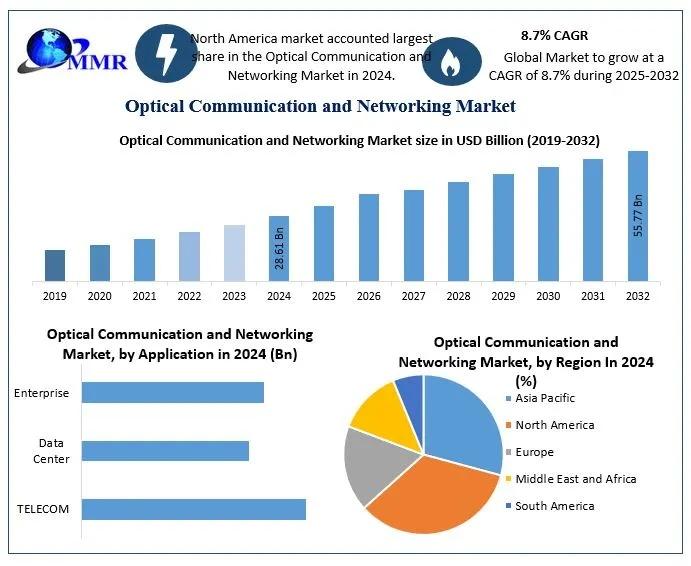
Anticipated Growth in Revenue: The Optical Communication and Networking Market size was valued at USD 28.61 Billion in 2024 and the total Optical Communication and Networking revenue is expected to grow at a CAGR of 8.7% from 2025 to 2032, reaching nearly USD 55.77 Billion.
Optical Communication and Networking Market Overview
The report focuses on key players in the Optical Communication and Networking industry, highlighting their strategic ambitions and growth strategies. The research evaluates a range of industry methods, including mergers and acquisitions, government and corporate transactions, partnerships and collaborations, joint ventures, brand promotions, and product launches. The latest Market Research Report presents a comprehensive analysis of the market, encompassing precise definitions, classifications, applications, and the industry's chain structure. With impartial and expert commentary, this report offers valuable insights into the present market scenario. It delves into crucial aspects such as market performance, production and consumption rates, demand and supply dynamics, and projected income generation for the forecast period. Moreover,
Optical Communication and Networking Market Scope and Methodology:
The Maximize Market Research report provides an extensive analysis of the Optical Communication and Networking market using a dynamic research methodology. It offers insights into key growth drivers, market dynamics, challenges, and scope, supported by PESTAL, PORTER, and SWOT analysis.
The report captures the latest developments and emerging technologies in the global Optical Communication and Networking market. It presents comprehensive information, including market shares, supply chain analysis, and key success factors, to understand the global Optical Communication and Networking market landscape. Industry experts from leading organizations in the global Optical Communication and Networking market share their insights and opinions in the concluding section of the report.
Request a Sample of the Full Market Report:https://www.maximizemarketresearch.com/request-sample/7169/
Optical Communication and Networking Market Regional Insights
The Optical Communication and Networking Market is divided into North America, South America, Europe, the Middle East and Africa, and Asia Pacific, according to regional analysis. Several areas are home to nations such as the United States, Canada, Mexico, United Kingdom, Germany, France, Spain, Italy, Rest of Europe, China, India, Japan, Australia, and South Korea.
Optical Communication and Networking Market Segmentation
by Component
Optical Fibers
Optical Transceivers
Optical Amplifiers
Optical Switches
Optical Splitters
Optical Circulators
Others
by Technology
SONET/SDH
WDM
CWDM
DWDM
Fiber Channel
by Application
TELECOM
Data Center
Enterprise
by Data Rate
Up To 40 GBPS
Greater Than 40 Gbps To 100 Gbps
Greater Than 100 Gbps
by Vertical
BFSI
Government
Healthcare
Cloud
Energy & Utilities
Others
Optical Communication and Networking Market Key Players
1. Ciena
2. ADVA Optical Networking
3. Ericsson
4. Corning
5. Oclaro
6. Mitsubishi Electric
7. Huawei
8. Cisco
9. Sumitomo
10. Nokia
11. Amazon
12. Apple
13. Microsoft
14. Google
15. Facebook
16. Infinera
17. NEC
18. Calix
19. ADTRAN
20. ZTE
Get Your Complimentary Sample Report Today :https://www.maximizemarketresearch.com/request-sample/7169/
Key questions answered in the Optical Communication and Networking Market are:
What is Optical Communication and Networking?
What is the growth rate of the Optical Communication and Networking Market?
Which are the factors expected to drive the Optical Communication and Networking market growth?
What are the different segments of the Optical Communication and Networking Market?
What growth strategies are the players considering to increase their presence in Optical Communication and Networking?
What are the upcoming industry applications and trends for the Optical Communication and Networking Market?
What are the recent industry trends that can be implemented to generate additional revenue streams for the Optical Communication and Networking Market?
Who are the leading companies and what are their portfolios in Optical Communication and Networking Market?
What segments are covered in the Optical Communication and Networking Market?
Who are the key players in the Optical Communication and Networking market?


Business Strategy Consultancy for Confident Decision-Making
Build strategic clarity with Egremont Group’s Business Strategy Consultancy, supporting leaders to define priorities, assess risk and make informed decisions while embedding business transformation services that connect ambition to execution and enable sustainable growth in complex and competitive environments.
Why Choose Egremont Group for Business Strategy Consultancy
- Clear, structured strategic thinking grounded in commercial reality
- Strong alignment between strategy, leadership and organisational capability
- Practical guidance that supports decisive executive action
- Experience shaping strategy during periods of uncertainty and change
- Strategies designed for delivery, not theoretical planning
Contact Details
Company Name: Egremont Group
Company Email: info@egremontgroup.com
Lead: Mark Davis
Lead Email: markdavis@egremontgroup.com
Business Phone: +44 (0) 20 7298 7878
Address: London, United Kingdom
See Our Work At: LinkedInblank" rel="nofollow ugc">https://www.linkedin.com/company/egremont-group), @EgremontGroup" target="_blank" rel="nofollow ugc">YouTubeblank" rel="nofollow ugc">https://www.youtube.com/@EgremontGroup)


The Role of AI in Modern SaaS Marketing Strategies
The SaaS industry has never moved faster. With thousands of platforms competing for the same buyers, the difference between growth and stagnation often comes down to how intelligently a company markets itself. Artificial intelligence has emerged as the defining force reshaping how SaaS companies attract, convert, and retain customers and understanding the AI role in SaaS marketing strategies is no longer optional for teams that want to stay competitive.
This is not about replacing marketers with machines. It is about giving marketing teams capabilities that were unimaginable just a few years ago the ability to personalise at scale, predict buyer behaviour, automate tedious workflows, and make decisions based on real data rather than gut instinct. AI is not a trend. It is a fundamental shift in how great SaaS marketing gets done.
Why AI Has Become Essential in SaaS Marketing
SaaS marketing presents a unique set of challenges. Sales cycles can be long and complex, buying committees often involve multiple stakeholders, churn is a constant threat, and the cost of acquiring a new customer must always be weighed against lifetime value. Traditional marketing tactics broad email blasts, generic landing pages, one-size-fits-all messaging simply do not cut through at the level required to drive predictable, scalable growth.
AI addresses these challenges directly. By analysing vast amounts of behavioural and demographic data, AI tools help SaaS marketers identify who their best-fit customers are, where those customers are in the buying journey, and what message will resonate most at each stage. The result is marketing that feels less like broadcasting and more like a conversation relevant, timely, and genuinely useful to the prospect.
Hyper-Personalisation at Scale
One of the most powerful applications of AI in SaaS marketing is the ability to personalise experiences at a scale no human team could achieve manually. AI-driven platforms can analyse user behaviour across a website, product, and email campaigns to serve each visitor dynamic content tailored to their industry, role, past interactions, and stage in the funnel.
This goes well beyond inserting a first name into an email subject line. Think of a CFO visiting a SaaS pricing page and seeing ROI calculators and cost-per-seat breakdowns, while a developer visiting the same page is shown API documentation and integration capabilities. Both experiences are generated automatically, in real time, based on what AI knows about each visitor. This level of relevance dramatically improves conversion rates and reduces the friction that kills deals.
For email marketing specifically, AI tools now segment audiences with far greater sophistication than traditional rule-based systems. Instead of sending the same nurture sequence to every trial user, AI identifies patterns across thousands of users which features they have explored, how frequently they log in, where they drop off and triggers the right message at exactly the right moment to keep them moving toward conversion.
Predictive Lead Scoring and Pipeline Intelligence
Not every lead is worth the same level of attention. One of the most commercially valuable AI role in SaaS marketing strategies is predictive lead scoring using machine learning models to rank inbound leads by their likelihood to convert into paying customers.
Traditional lead scoring relies on simple criteria: job title, company size, form fills. Predictive scoring goes much deeper. It pulls in firmographic data, intent signals, product usage patterns, engagement history, and even external signals such as recent funding rounds or hiring activity to build a comprehensive picture of where a lead stands. Sales teams armed with AI-powered scoring spend less time chasing cold prospects and more time closing deals with the accounts most likely to convert.
Beyond scoring, AI provides pipeline intelligence that helps revenue teams understand which deals are at risk and why. If a prospect goes cold after a demo, AI tools can flag the change in engagement and suggest targeted actions a case study tailored to their vertical, a direct outreach from a senior team member, or a limited-time trial extension to re-engage the deal before it is lost.
AI-Powered Content Creation and SEO
Content remains the backbone of inbound SaaS marketing, but producing it consistently and at quality is resource-intensive. AI writing tools have matured significantly, enabling marketing teams to draft blog posts, landing page copy, product descriptions, ad variations, and social content far more efficiently than before.
Critically, AI does not replace the strategic thinking and subject-matter expertise that makes SaaS content authoritative. What it does is eliminate the blank-page problem, speed up first drafts, and allow writers to focus on refinement, positioning, and the editorial layer that elevates content above the noise. Teams that use AI as a multiplier rather than a replacement consistently outproduce those that do not.
On the SEO side, AI tools analyse search intent at a far more granular level than keyword research tools of the past. They identify topic clusters, surface content gaps, suggest internal linking strategies, and monitor how algorithm updates affect rankings giving SaaS SEO teams a systematic, data-driven approach to organic growth that compounds over time.
Reducing Churn Through Predictive Customer Intelligence
Acquisition is only half the battle in SaaS. Retention is where sustainable revenue is built. AI plays a transformative role in churn prevention by monitoring product usage signals that indicate when a customer is at risk of cancellation before they ever raise their hand to leave.
Machine learning models trained on historical churn data learn to recognise the early warning signs: declining logins, reduced feature adoption, failure to complete key onboarding steps, or a drop in the number of active seats. When these signals appear, automated workflows can trigger proactive outreach a check-in from a customer success manager, an in-app prompt highlighting an underused feature, or a personalised webinar invitation aligned to the customer's use case.
The commercial impact of this is significant. Reducing monthly churn by even a fraction of a percentage point has a compounding effect on annual recurring revenue that far outweighs the cost of the AI tooling required to achieve it.
Paid Advertising and Campaign Optimisation
SaaS companies typically spend a meaningful portion of their marketing budget on paid acquisition. AI has made this spend significantly more efficient. From Google Performance Max campaigns to Meta's Advantage+ targeting, AI-native advertising platforms now handle bid optimisation, audience segmentation, and creative testing automatically learning in real time from conversion data to allocate budget where it drives the best results.
For SaaS marketers running their own paid programmes, AI tools analyse multi-touch attribution data to build a clearer picture of which channels and touchpoints actually drive pipeline. This moves budget decisions away from last-click assumptions and toward a more accurate understanding of how the full buyer journey works enabling smarter allocation across search, social, display, and review platforms.
Building an AI-Ready Marketing Strategy
Adopting AI in SaaS marketing is not about purchasing a single platform and hoping for results. It requires a deliberate strategy starting with clean, well-structured data, choosing tools that integrate with existing CRM and marketing infrastructure, and building a culture where marketers are curious about experimentation and comfortable iterating based on what the data shows.
The SaaS companies winning today are those that treat AI as a strategic capability rather than a tactical shortcut. They invest in the right foundations, empower their teams to use AI tools confidently, and continuously refine their approach as the technology evolves. The AI role in SaaS marketing strategies will only deepen from here and the gap between companies that embrace it and those that do not is already widening.
For SaaS marketers, the question is not whether to adopt AI. It is how quickly and how thoughtfully they can make it central to everything they do.